Becerra Inherits $29 Billion Debt From Newsom
The incoming governor faces a mandate to fix a budget deficit that accumulated during the previous administration.
By Ryan Davidson ·
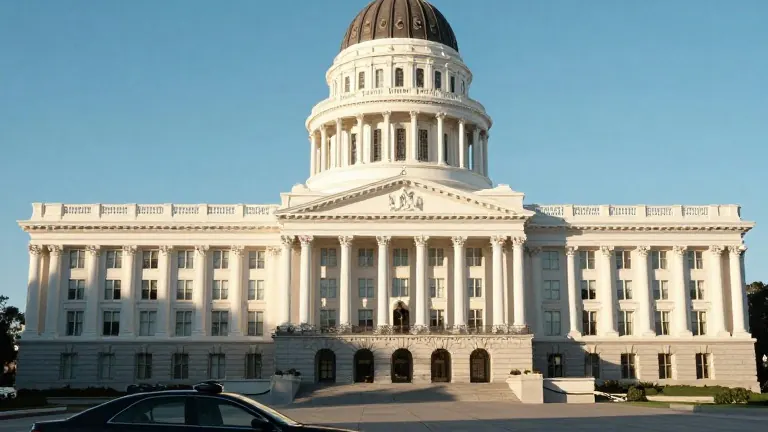
Xavier Becerra will face a difficult financial reality upon taking office as California’s governor in January. He must submit a new budget to the state Legislature just days after his inauguration. The budget he inherits contains a shortfall that officials describe as a major fiscal challenge.
Outgoing Governor Gavin Newsom signed the 2026-27 budget in June. At that time, Newsom stated that the budget was balanced and would remain balanced during his successor’s first year. State budget data suggests that assessment was optimistic. During Newsom’s eight years in office, the state spent $1.7 trillion from the general fund. Total revenue for that period was $1.4 trillion. This gap represents an average annual overspending of $37 billion.
The state covered these shortfalls through various methods. These included using accounting adjustments, draining emergency reserves, and taking on loans both on and off the books. The spending increase also led to a payroll expansion of 100,000 positions over the last decade.
Gabe Petek, the budget analyst for the Legislature, describes the current situation as a $29 billion wall of debt. This terminology echoes a phrase used by former Governor Jerry Brown in 2010. Brown faced a similar $35 billion deficit when he began his second term after the Great Recession. To address that issue, Brown implemented a combination of spending cuts and temporary tax increases. He also established reserves to cushion future revenue drops. During his tenure, state income and spending closely matched.
Becerra now must decide between continuing deficit spending or adopting a balanced approach. Continuing the current trend would increase state debt further. Alternatively, he could follow the model used by Brown, which requires political courage and public engagement. Becerra has remained reserved about his specific policy plans until recently. He signaled openness to tax measures that Newsom avoided.
Becerra mentioned several potential revenue sources. He expressed interest in raising taxes on high-income Californians. He also proposed taxing employers whose low-paid workers qualify for Medi-Cal. Additionally, he suggested closing corporate tax loopholes and adopting a mileage-based tax on electric vehicles. Becerra noted that he opposed Proposition 40, a billionaire wealth tax that appeared on the November ballot. However, he argued that high-income earners should pay a fair share if their rates are lower than those of essential workers like firefighters, teachers, and nurses.
Legislation passed this year already allows the state to explore taxing employers of Medi-Cal-eligible workers. Implementing these new taxes will likely face resistance. Californians currently carry one of the highest tax burdens in the nation, a factor in recent population and corporate losses. To make tax increases acceptable, they would likely need to be paired with spending cuts. Those cuts would also face opposition from various interest groups.
More Politics · Anaheim news · Report a business · Got a Story?