
Midterm arithmetic tightens as voters weigh cost of living
Democrats need net gains of three House seats and four Senate seats to flip control, while Republicans rely on turnout to hold their majority.
By Stella Brooks ·
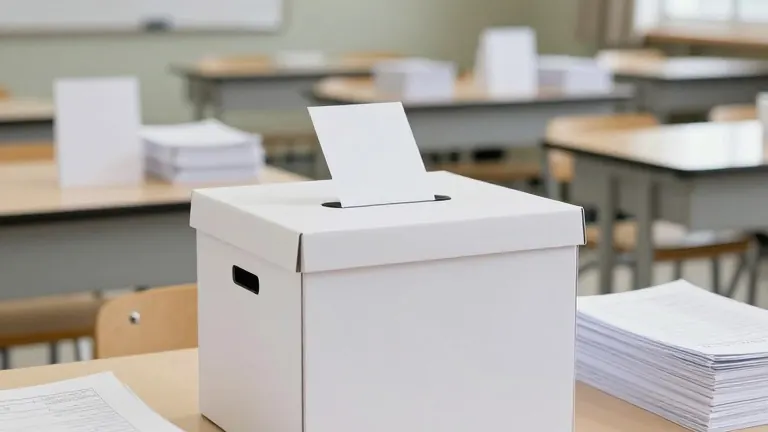
Voters across the United States are deciding the balance of power in Congress for the final two years of President Donald Trump’s second term. All 435 House seats, 35 Senate seats, and 36 governorships are on the ballot. For many Americans, the decision centers on high prices and an unpopular war with Iran. AP-NORC polling shows that 35 percent of U.S. adults approve of Trump’s job performance. Roughly seven in 10 adults say the country is heading in the wrong direction.
The path to a majority is mathematically precise for both parties. Democrats need a net gain of three House districts to claim the chamber. Republicans can lose no more than two seats. In the Senate, Democrats require a net gain of four seats for control. Republicans can afford to lose only two. Ballotpedia identifies 46 battleground districts in the House. Small shifts in turnout in these areas will determine which party controls the legislative agenda.
Republicans have attempted to counter the historical midterm penalty through redistricting and spending. Republican committees have outraised and outspent their Democratic counterparts. Trump-affiliated groups have contributed to this financial edge. However, 88.1 percent of Republican general election television ad spending targeted states and districts that Trump won in 2024. RNC Chairman Joe Gruters said, “Everything depends on turnout. If we turn out our voters, we win, and that’s what we’ve been planning for.”
Democrats are relying on national dissatisfaction and targeted economic messaging. DCCC Chair Rep. Suzan DelBene stated, “The American people are angry. They want change.” The party is focusing on taxes and healthcare costs. House Democratic Leader Hakeem Jeffries has outlined a 100-day agenda centered on the cost of living and oversight if his party takes the House. A victory would likely lead to investigations and possible impeachment proceedings.
Thirteen Senate races are considered competitive. Key contests include Georgia, where Sen. Jon Ossoff faces Rep. Mike Collins. In Ohio, former Sen. Sherrod Brown challenges Sen. Jon Husted. In Michigan, Democrat Abdul El-Sayed faces Republican Mike Rogers. The race became contentious after El-Sayed’s former primary opponent endorsed Rogers. In Maine, Sen. Susan Collins faces former state Senate President Troy Jackson amid economic strain and tariff concerns.
Governor races also present tight contests for statehouses. Democrats currently hold a minority of governorships. A net gain of two seats would give them a nationwide majority for the first time in two decades. In Georgia, former Atlanta Mayor Keisha Lance Bottoms runs against Republican Rick Jackson. In Nevada, Democratic Attorney General Aaron Ford challenges incumbent Gov. Joe Lombardo. Texas, Florida, and Iowa are also identified as competitive governor races.
More than 57 million people had voted as of Monday. This total surpasses early vote counts from four years ago in many closely watched states. The U.S. Postal Service added hours and staff to ensure mail ballots are counted on time. A federal judge temporarily barred the Trump administration from implementing a plan to prevent noncitizen voting. Critics argue the move risks disenfranchising eligible voters, while the administration maintains it is necessary for integrity.
The 2026 elections are likely to be the most expensive in history. At the candidate level, Democrats have outraised their opponents, even as party committees saw different results. Wall Street is watching for signals that could impact investor concerns about AI spending and debt ceiling negotiations. California, Florida, Missouri, North Carolina, Tennessee, Texas, and Ohio are using new congressional maps. These changes could alter political dynamics in traditionally safe areas.
More Business · National news · Business Watchdog · Report a business · Got a Story?