Deer Control Report Shows Australia's Failing Efforts to Curb Invasive Populations
A leaked government assessment indicates that feral deer costs exceed $91 million annually, with only South Australia successfully reducing its numbers.
By Aaron Foster ·
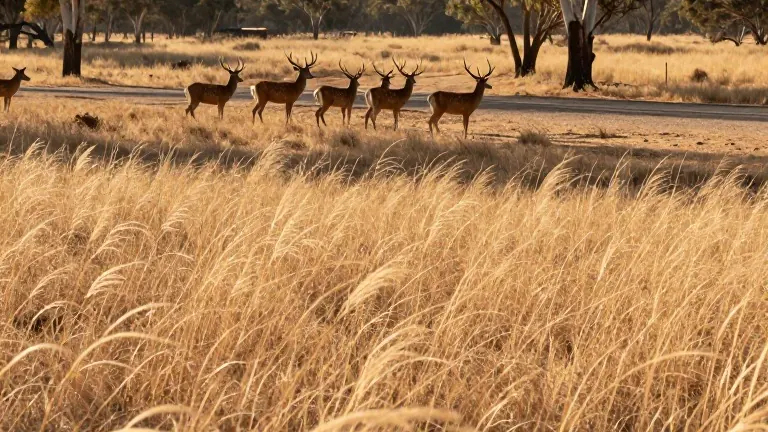
A newly released government assessment indicates that Australia is failing to control its feral deer population. The report, prepared by the National Vertebrate Pest Coordinators, grades the performance of every state and territory in managing the invasive species. The findings suggest that without immediate financial investment, the deer could become as damaging to the economy and environment as feral pigs.
The assessment covers the period from 2020 to 2025. During these five years, deer populations increased in both numbers and geographic range. The report estimates that these animals cause over $91 million in production losses and management costs each year. Deakin University professor Euan Ritchie, who presides over the Australian Mammal Society, stated that he was not surprised by the results. He described the situation as a sustained failure by governments to invest enough in population control.
Six species of feral deer are established in Australia: chital, fallow, hog, red, rusa, and sambar. The highest densities are found in south-eastern Australia. Smaller, more localized populations exist in South Australia, Western Australia, and the Northern Territory. The report uses a traffic light system to evaluate performance in four categories: abundance, distribution, and environmental and agricultural impacts.
South Australia is the only jurisdiction to receive a green rating in all four categories. The state launched a statewide eradication plan in 2022. In contrast, New South Wales and Tasmania received red ratings in all categories. Queensland and the Australian Capital Territory each received three red ratings and one yellow. No other region earned a single green pass.
Reece Pianta, advocacy manager for the Invasive Species Council, said the report confirms trends land managers have observed for years. He noted that the council released footage in May 2025 showing the Gold Coast under pressure from deer. Pianta argued that deer lack the public recognition of other invasive species but require similar intervention. He stated that early action could reverse the spread, whereas waiting would lead to a systemic underfunding problem.
Andrew Lowe, director of the Adelaide University Environment Institute, described the South Australian results as a good news story. He noted that the state began its $4 million eradication program in 2022 after estimates showed annual damage at $36 million. Lowe projected that damage would reach $241 million by 2031 if unchecked. He said that functional eradication in South Australia will require approximately $10 million over the next decade.
Lowe explained that while deer have declined significantly in rural areas, they are moving to the edges of urban zones. In these fringe areas, culling costs are higher. He compared the cost of continued action to the cost of inaction, noting that spending $10 million to finish the job is cheaper than facing $240 million in future damages.