Easter Island: 1,000 Stone Guardians
Nearly 1,000 monolithic statues, known as moai, dot the 63-square-mile Chilean island, each with a distinct history spanning 700 years.
By Nour Haddad ·
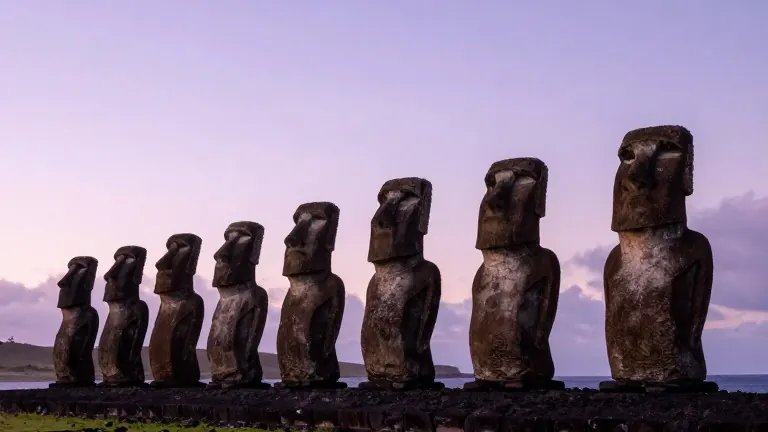
Easter Island, known locally as Rapa Nui, holds nearly 1,000 stone statues called moai. These figures were carved from compressed volcanic ash between A.D. 1000 and the 1650s. The island lies in the South Pacific Ocean, approximately 2,300 miles from the Chilean mainland. Chile annexed the territory in 1888.
The statues vary drastically in size. Early moai stood about 3 feet tall and were created to house the spirits of deified ancestors. Later, chieftains and elites commissioned larger figures. These later statues reached heights of 33 feet and weighed over 180,000 pounds. Guide Cecilia, a local expert, explained that the size of a moai indicated the status of the tribe or spiritual leader who commissioned it.
Most moai were positioned with their backs to the sea. They faced inland villages from stone platforms known as ahu. This orientation allowed the statues to watch over up to 18 tribes. Many later figures wore red hats called pukao. These hats weighed 13 tons and symbolized the topknots of the upper class. The hats were often painted with red dirt. The statues also featured eyes made of white coral, which locals believed brought the figures to life.
The creation process remains a subject of debate. The Rano Raraku quarry served as the birthplace for 95% of the moai. It now functions as a resting place for 400 of the statues. Some figures remain half-buried or attached to the bedrock. One unique statue on a slope is the only one on the island that kneels and has a goatee. Theories on how the statues moved from the quarry to their sites include being dragged on sleds by up to 180 people or rocked upright by teams using ropes.
Tribal warfare erupted in the 17th century due to depleting natural resources. Opposing factions knocked rival moai face-first onto the ground. This act was considered the highest form of disrespect. Eyes were dug out and shattered to remove the statues' power. No toppled moai stood upright until archaeologists began restoring them in the mid-1950s. One violent conflict involved the Short Ears and the Long Ears. The Short Ears set a ditch on fire and threw the Long Ears into it, killing almost the entire clan.
Following the destruction of the moai, the Birdman cult emerged. For roughly 186 years, annual races determined the island leader. Contestants had to climb down a 1,000-foot cliff, swim a mile through shark-infested waters, and retrieve an egg from a migrating sooty tern. The winner had to swim back with the egg intact. The victor's chief was crowned Birdman and entered a year of isolation without bathing or cutting fingernails. Otea, a local guide and dancer, described the competition as a form of political control.
The cult collapsed after Peruvian slave ships captured roughly 1,500 men. This number represented nearly half of Rapa Nui's population. The captives were forced into labor in Peru. Those who returned brought smallpox to the island. By 1877, the population had dropped to 111 inhabitants. The island's name derives from a Dutch explorer who arrived on Easter in 1722.
Tourism on the island is strictly regulated. Visitors often stay at lodges like Nayara Hangaroa, which is designed to resemble the Birdman cult's ceremonial village. The island features black volcanic rocks and green pastures. Horses and cows roam freely. Despite its isolation, the island has modern connections. Passengers frequently carry boxes of Dunkin' doughnuts from Santiago, as the island has no chain stores.