Houston mayor restricts police cooperation with ICE after Texas election shift
A new city order limits when officers can contact federal agents, a move driven by the return of Democratic control in the state.
By Nour Haddad ·
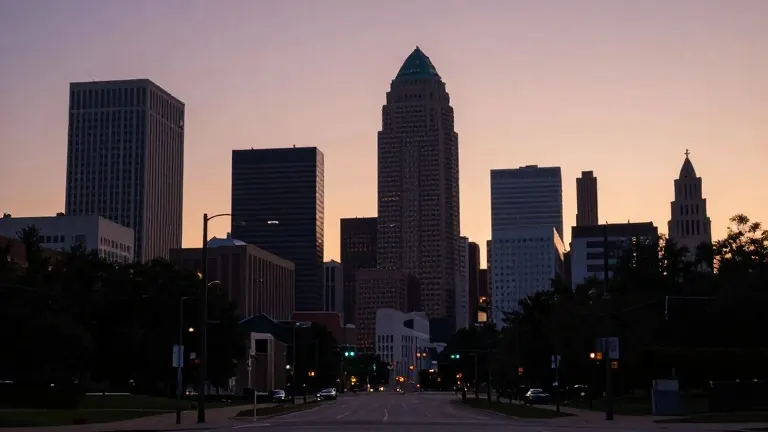
Houston Mayor John Whitmire signed an executive order on Friday that restricts how local police interact with U.S. Immigration and Customs Enforcement. The directive limits cooperation to specific situations where federal immigration authorities are directly involved in an arrest or hold a formal warrant. Whitmire described the action as a direct response to Democrats reclaiming political power in Texas.
The policy marks an early shift in the nation's fourth-largest city following Tuesday's midterm elections. It stands in contrast to the approach taken by previous Republican leaders in Texas, who have strongly supported President Donald Trump's deportation agenda. The change comes after Democratic candidates won key offices, including the governorship, which was held by a Republican for more than three decades.
Whitmire stated that the city should target immigrants who pose a danger to the public rather than those working or attending school. Under the new rules, Houston police may contact ICE only if a person is arrested for a charge that allows for jail time. Officers may also contact the agency if ICE issues an administrative warrant. This type of warrant is an order signed by a senior ICE official that indicates a person is wanted by immigration officials.
The two-page order explicitly states that a person's immigration status should not be the sole reason to contact ICE, extend detention, or hold someone in custody. Whitmire noted that in cases involving traffic incidents, officers should issue a citation or a warning and allow the driver to proceed. This approach aims to reduce the fear that a simple stop could lead to a federal referral.
The move follows a series of high-profile incidents in Houston involving ICE agents. This summer, an officer fatally shot a Mexican homebuilder, and another officer struck a man with a vehicle. Last week, a grand jury indicted ICE officer Mario Alberto Morales on a charge of aggravated assault with a deadly weapon. Prosecutors claim Morales intentionally rammed his car into Miguel Parra Hernandez, breaking the man's leg. ICE argued that Hernandez ran in front of the vehicle, a claim prosecutors say video evidence contradicts.
Despite receiving $75 billion in funding from Congress, ICE relies heavily on local police to locate and detain individuals. The agency has signed approximately 2,600 agreements with state and local agencies to assist in enforcement. Texas has been a primary location for these arrests. Former Governor Greg Abbott had previously threatened to withhold nearly $200 million in public safety grants from Houston, Austin, and Dallas after city officials attempted to limit police cooperation with ICE.
Houston's City Council previously passed an ordinance that removed the requirement for officers to wait 30 minutes for ICE agents to pick up someone with a nonjudicial warrant. If agents did not arrive in time, officers could release the detained person. Abbott claimed this ordinance violated state grant conditions for the World Cup games hosted in June. Attorney General Ken Paxton filed a lawsuit against the city, alleging it broke a 2017 state law that restricts local immigration policies.
The city amended the ordinance two weeks after its passage to remove language that said administrative warrants were insufficient for arrest or detention. Cesar Espinosa, executive director of the immigrant rights group FIEL, said the new mayoral order provides relief to communities that were hesitant to seek help or run errands. FIEL planned a press conference on Friday to discuss the announcement and its impact on local residents.