Israel votes as no bloc leads
Exit polls are set for 10:00 p.m. Tuesday as Netanyahu and Eisenkot compete without a clear path to 61 seats.
By Ryan Davidson ·
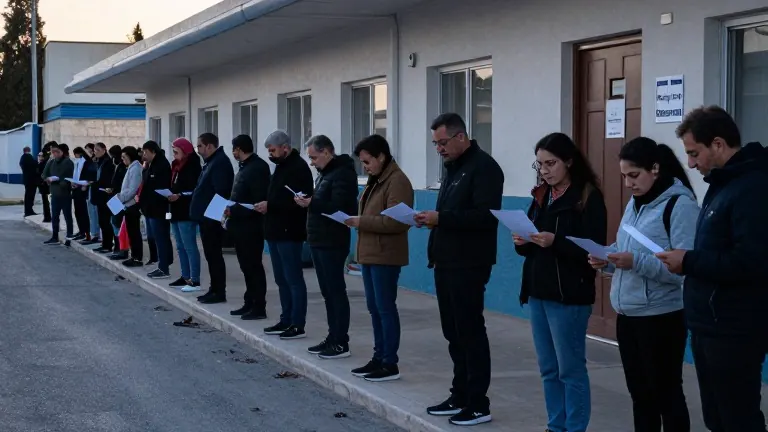
Israelis are choosing a new government on Tuesday in the first national election since the Hamas attack on October 7, 2023. The contest pits Prime Minister Benjamin Netanyahu’s coalition against an opposition bloc led by Gadi Eisenkot’s Yashar party. Neither side is projected to command the 61 seats required for a majority in the 120-member Knesset.
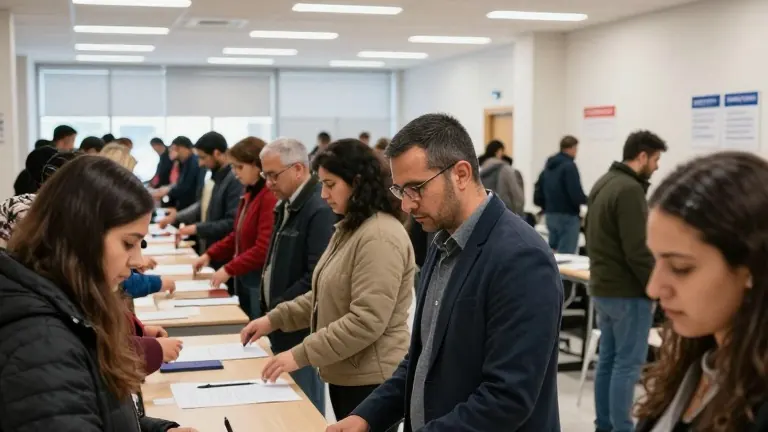
Polling stations opened at 7:00 a.m. local time. Exit polls are scheduled for release at 10:00 p.m. to provide preliminary projections. Final official results will be confirmed in the days following the vote. Voting at diplomatic missions abroad ended on October 16, while some military bases began voting early last week.
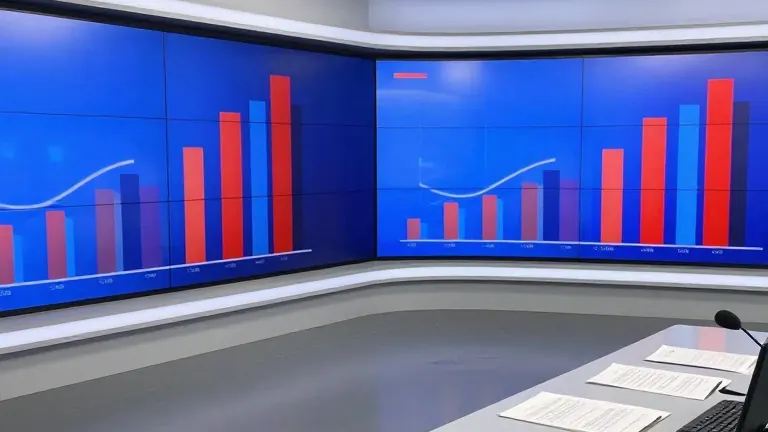
The Channel 12 poll released Friday gives the opposition bloc a 56-seat advantage over Netanyahu’s camp, which stands at 50 seats. Arab parties are projected to secure 16 seats combined. Most opposition leaders have pledged to avoid forming a government with these parties, citing the political shift after the 2023 attack. This creates a mathematical challenge for both sides to reach the 61-seat threshold.
Within the opposition, Eisenkot’s Yashar party is projected to win 22 seats, the most of any single party. Bennett’s B’Yachad party is expected to receive 14 seats. Netanyahu’s Likud party is projected to drop to 19 seats, down from the 32 it currently holds in the outgoing Knesset. The shift reflects a change in voter priorities following three years of war.
Central issues for voters include the Israel Defense Forces’ manpower crisis and the contentious conscription of ultra-Orthodox men. Many also demand a state commission of inquiry into the government’s failures surrounding the October 7 attack. Traditional debates over a Palestinian state have receded, as most parties now agree against immediate statehood. Netanyahu’s personal accountability for the events of 2023 remains a focal point for the opposition.
Voter turnout will determine the electoral threshold, set at 3.25% of valid votes. According to calculations by Prof. Alex Weinreb of the Taub Center, a party needs 165,635 votes to enter the Knesset if turnout reaches 70%. Higher turnout raises the required number, posing a risk for smaller parties such as Ofer Winter’s People of Israel and Yoaz Hendel’s Reservists-Economics party. Their success or failure will influence the final balance of power.
Police prepared for potential public order disruptions, particularly after the release of exit polls. Approximately 20,000 police officers, Border Police officers, and volunteers are deployed nationwide. Forces are stationed at polling stations and surrounding areas to maintain safety. The police aim to safeguard the integrity of the election and ensure the democratic process proceeds according to law.
The election marks a pivotal moment for a country that has been at war for three years. The outcome will determine whether Netanyahu continues his 19 non-consecutive years in power or if a new leadership emerges to address the post-war security and economic challenges.