Jewish community debates fading dress codes at funerals and Shabbat
A new essay questions why men now wear jeans to services, prompting a call to restore traditional standards of respect and family time.
By Stella Brooks ·
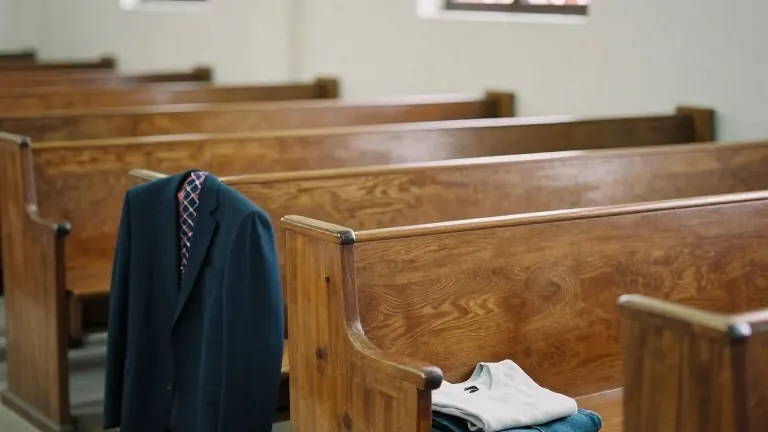
One New Jersey resident has raised questions about the changing standards of attire at Jewish services and family gatherings. The author notes that men increasingly arrive at funerals in jeans, T-shirts, and slacks, a shift that contrasts with past norms where a tie and jacket were standard for weddings, bar mitzvahs, and Shabbat.
The writer researched funeral home websites to determine if a formal code of conduct still exists. Most sites advise men to wear a shirt, tie, and jacket. They also counsel women against dressing as if they are heading to a park or beach. The author consulted "The Jewish Way in Death and Dying" by Maurice Lamm, a common text in shiva houses, but found that the book does not specifically address clothing requirements.
The shift extends beyond death rituals to the observance of Shabbat. The author observes that families often change from formal wear in the morning to extreme casual clothing in the afternoon. Children are frequently sent outside to play on scooters or with baseball bats, replacing the structured atmosphere of the morning. The writer suggests that parents should teach children that the holy day continues until Motzei Shabbat, after Havdalah.
Acknowledging that keeping the atmosphere of Shabbat alive in the afternoon can be difficult once groups disperse, the author argues that sending children away is often a way for parents to avoid spending time with them. The writer states, "Sending them outside of the home to play in many cases is just a poor excuse for allowing yourself to renege on your responsibility to be with them." The goal is to use the extra time for family interaction rather than letting it drift into unstructured play.
The piece highlights a broader discomfort with a perceived lack of decorum. The author mentions that it irks them to see men in casual clothes and women checking their phones at funerals. The writer believes that dressing appropriately is a way to show respect to the deceased and the grieving family, even if the loss is less personal for the attendee.
The author concludes that the community must decide if it is possible to recreate the atmosphere of previous years. The call to action is simple: attend funerals with proper respect and use Shabbat afternoons for family time. The writer emphasizes that the day is meant for the family and should not be filled with sports equipment and distractions.
The essay serves as a personal reflection on these changes, noting that the topic is "tough" but important. The author urges readers to rethink their habits and prioritize presence and respect during these key moments in the Jewish calendar.