Serbia's Foreign Policy: Gradual Shifts Expected After Election Victory
Analysts predict internal reforms will take precedence over regional diplomatic changes following the Student List's win.
By Aaron Foster ·
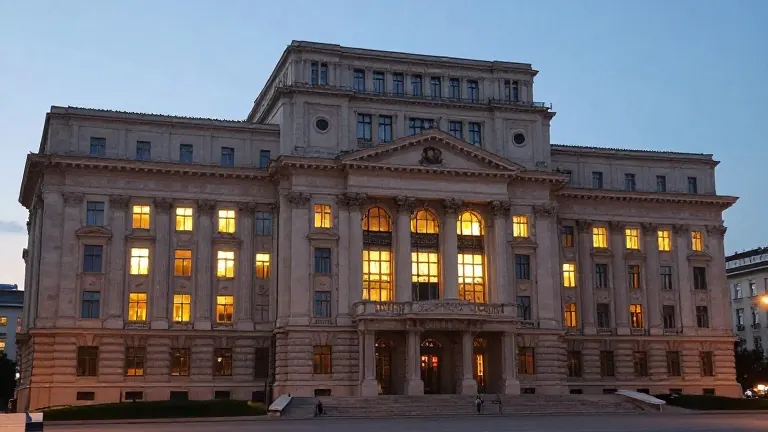
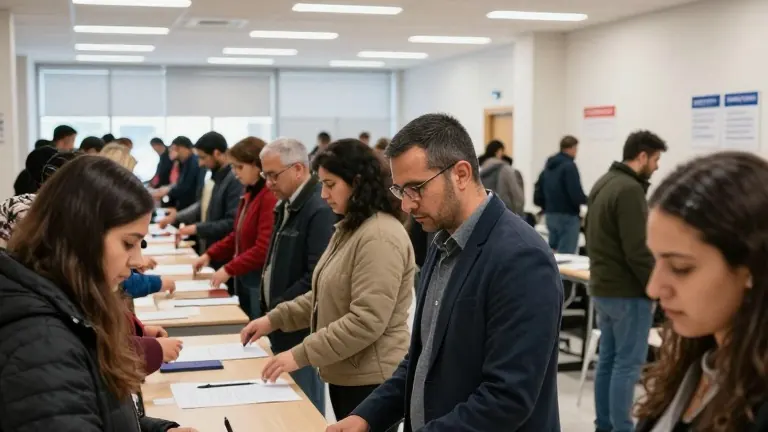
Serbia’s diplomatic posture is expected to change slowly after the opposition Student List defeated the ruling Serbian Progressive Party on Sunday. The victory ended fourteen years of continuous authority held by Aleksandar Vucic and his party. This result marks a decisive break from the previous administration that controlled the country’s political direction for more than a decade.
International observers are monitoring the situation closely as Belgrade prepares for a transition period. The next major political event is the presidential election scheduled for December. Many foreign governments and regional neighbors are asking whether the departure of Vucic will lead to an immediate pivot toward the West. Experts caution that this process will be gradual rather than instantaneous.
Aleksandar Popov, director of the Centre for Regionalism in Novi Sad, stated that regional relations will not be the first priority for the new leadership. He explained that the incoming government must first address domestic issues. These include a judiciary, prosecution service, police force, and media sector that were deeply influenced by the previous regime. Popov described the state as having captured all democratic institutions, requiring significant internal repair before external diplomacy can resume effectively.
The relationship between Serbia and its neighbors has often been strained by the nationalistic rhetoric of the outgoing administration. Relations with Croatia are particularly tense, marked by frequent sharp exchanges. Vucic recently accused Zagreb of organizing a color revolution during mass protests in Serbia. Popov noted that while relations with Croatia are not frozen, they are not as they should be between neighboring states. He also pointed out that issues with Bosnia and Herzegovina remain unresolved, and relations with Montenegro are disrupted.
Popov suggested that the new government, likely led by experts and civic leaders, will focus on stabilizing the region. He expressed hope that this shift will revive Serbia's efforts to join the European Union. The previous government sabotaged this integration process, and the EU requires good neighborly relations for membership. The new administration's primary task will be to repair these damaged ties to meet European standards.
Beyond the Balkans, global powers are watching Serbia's stance on Russia and Ukraine. Under Vucic, Serbia balanced its relationships by refusing to impose sanctions on Russia while allowing ammunition to flow indirectly to Ukraine. Vuk Vuksanovic, a lecturer in foreign policy at King’s College London, predicted that foreign policy will change the least of all Serbian policy areas. He noted that international and domestic structures shaping these policies will remain in place. Moscow viewed Vucic as a known quantity, and while Russian influence will suffer a blow, the new government is unlikely to adopt a hawkish stance immediately.
Serbia still relies on preferential gas prices from Russia, and the Kosovo dispute remains unresolved. Parts of the public remain disillusioned with the West, making a sudden break with Moscow impractical. Vuksanovic stated that the new government will not join EU sanctions or take an aggressive posture toward Moscow. Serbia will maintain its policy of not recognizing the annexation of Crimea and Donbas. However, the continuation of ammunition deliveries to Kyiv is uncertain, as the opposition viewed these sales as a cynical move to buy Western tolerance for domestic rule.
The relationship with Israel is another key area of focus. Under Vucic, Serbia established a strong partnership with Prime Minister Benjamin Netanyahu's government, involving arms trade and technology exchanges. Bosko Jaksic, a foreign policy analyst, said that ties will not be severed, but recent controversial agreements will face scrutiny. The new government will re-examine contracts concerning Serbian ammunition exports to Israel and Israeli surveillance equipment exports to Serbia. Netanyahu's government has lost another nationalist ally in Europe following Viktor Orban's removal in Hungary.
Jaksic noted that Serbia's future stance will depend on political developments in Jerusalem. The way Israel positions itself toward the new authorities in Belgrade depends largely on the outcome of Israel's own elections. Jaksic emphasized that Serbia's policy of sitting on multiple geopolitical chairs will be re-evaluated. It is realistic to expect Belgrade to strengthen its ties with the EU. The international community should anticipate a period of intense internal reform rather than sudden geopolitical realignments as Serbia enters this new political era.