Afghan opium production surges 400 percent as Taliban ban faces strain
The U.N. reports cultivation has tripled in one year, with farmers growing poppies in secret to survive deepening poverty.
By Ryan Davidson ·
Afghanistan produced 400 percent more opium in 2026 than in the previous year, according to a report released Thursday by the United Nations Office on Drugs and Crime. The agency stated that this marks the first major increase in output since the Taliban government enacted a formal narcotics ban in April 2022.
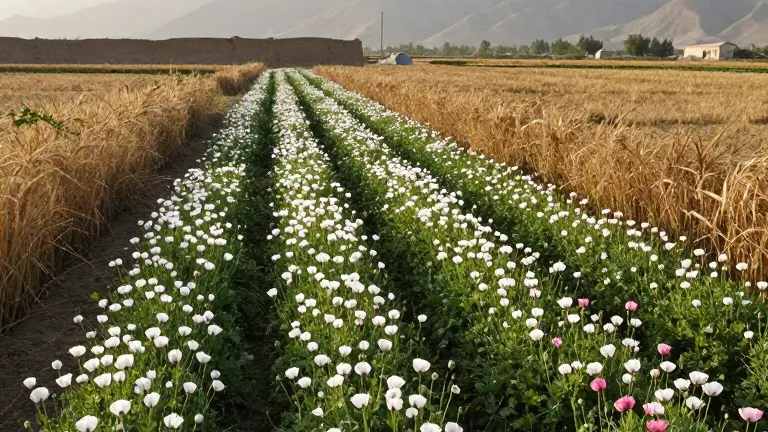
Cultivation areas expanded from 10,000 hectares to more than 43,000 hectares over the last twelve months. The report attributes this jump to worsening poverty, which has pushed many growers to plant illicit crops in hidden locations. Farmers are now concealing small poppy plots inside cereal fields or within walled compounds to avoid detection by authorities.
Monica Juma, the executive director of the U.N. drug agency, noted that the fourfold rise in cultivation reveals the difficulty of maintaining bans when poor families lack other options for food security. She emphasized that the Taliban and international partners must collaborate on investing in farming infrastructure and market access. Her statement called for specific support for alternative livelihoods to help break the cycle of illicit farming.
Prior to the Taliban seizing power in August 2021, the country was the world's leading opium producer and a primary source of heroin for Europe and Asia. The 2022 ban disrupted the income streams of hundreds of thousands of farmers and day laborers who depended on the crop. Although current production levels remain lower than pre-ban figures, the recent spike is the highest recorded since the restriction took effect.
Foreign Minister Amir Khan Muttaqi addressed the issue on Tuesday, describing the fight against narcotics as one of the administration's top achievements. He acknowledged that security measures alone are insufficient and that the international community shares a responsibility in controlling the drug trade. Muttaqi argued that effective action requires supporting alternative livelihoods, treating addiction, and strengthening regional cooperation against trafficking networks.
The U.N. agency cautioned that it is too early to determine if this surge is a temporary fluctuation or the start of a broader resurgence. The report recommends continued monitoring to track whether the clandestine farming trend stabilizes or accelerates in the coming seasons.